When you take out a loan, whether for a car, home, or personal needs, the interest you pay is a major part of the cost. Banks don’t just pick a number—they use specific methods to figure out how much interest you’ll owe. Understanding these calculations helps you see the true price of borrowing. It allows you to compare different loan offers, spot if a deal is fair, and plan your budget without surprises.
Many people sign loan agreements without knowing how interest adds up over time. This can lead to paying more than expected or struggling with payments. By learning the basics, you gain confidence to ask questions and choose wisely. In February 2026, average personal loan rates are around 12.15% for those with good credit. This article breaks it down simply, with examples, so you can follow along.
Key Components: Principal, Interest Rate, and Loan Duration
Banks start with three main parts to calculate interest: the principal, the interest rate, and the loan duration.
The principal is the amount you borrow. For example, if you need $10,000 for home repairs, that’s your principal.
The interest rate is the percentage the bank charges on the principal. It’s like a fee for using their money. Rates vary by loan type and your credit. A 12% rate means you pay 12% of the principal in interest each year, but it’s often calculated monthly.
Loan duration is how long you have to repay, like 3 years or 5 years. Shorter durations mean higher monthly payments but less total interest. Longer ones spread costs but add more interest overall.
These work together. A high rate on a large principal over many years increases costs a lot.
What Is Amortization?
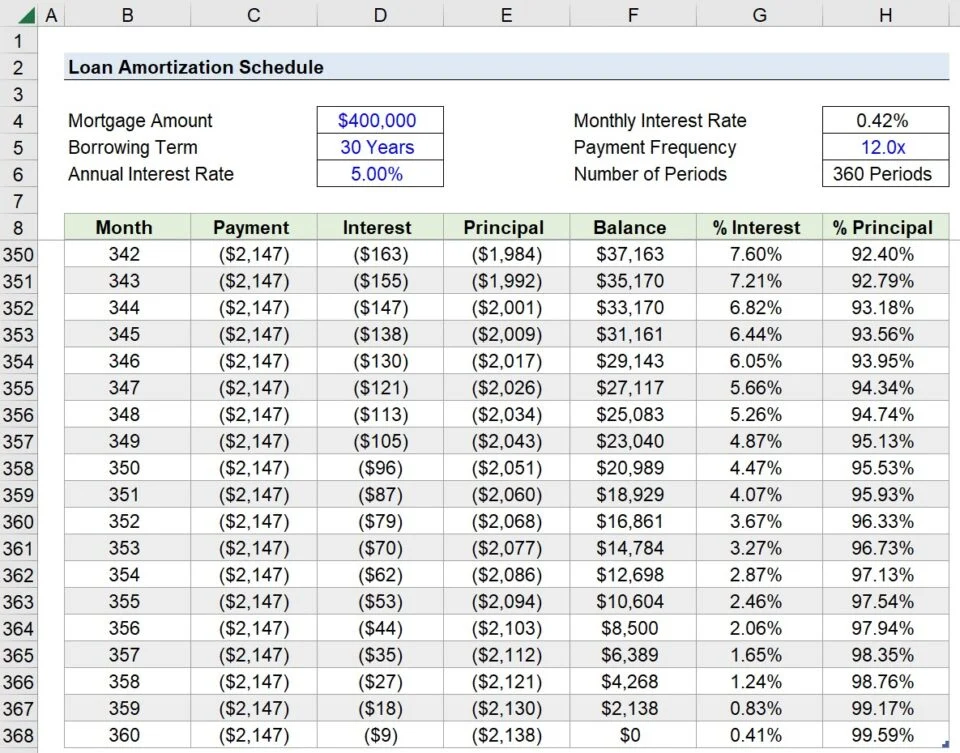
Amortization is how banks spread your loan payments over time. Each payment covers some interest and some principal, until everything is paid off.
Early payments mostly go to interest because the principal is high. As you pay down the principal, interest drops, and more goes to reducing the balance.
This keeps monthly payments steady but changes the split inside. It’s common for home and car loans.
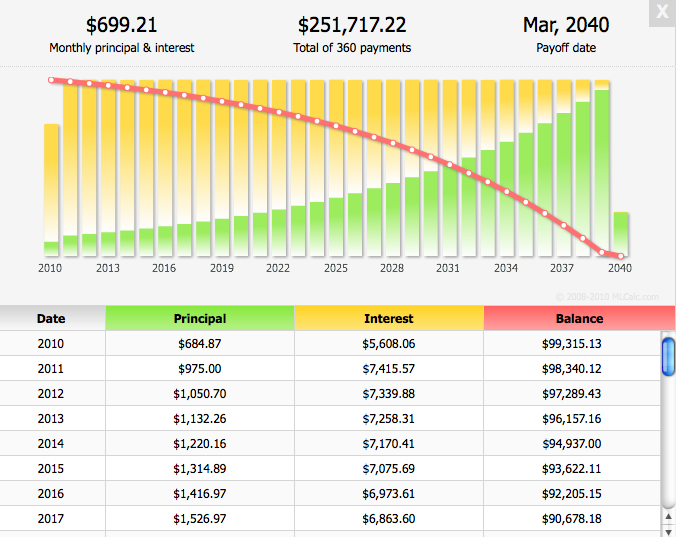
For a $10,000 loan at 12% over 3 years, monthly payment is about $332. In month 1, $100 might be interest, $232 principal. By month 5, interest is $91, principal $241.
Simple Interest vs. Compound Interest in Banking
Simple interest is straightforward: charged only on the principal. Formula: Interest = Principal × Rate × Time.
For $5,000 at 10% for 1 year: $5,000 × 0.10 × 1 = $500. Total repay $5,500.
Banks use simple for short-term loans, like some payday options.
Compound interest adds interest to the principal, so future interest is on the growing amount. It’s like interest earning interest.
In loans, it’s often monthly. For the same $5,000 at 10% compounded monthly: More than $500, around $523.
Most long-term loans use compound, making them costlier if not paid fast.
The Reducing Balance Method
Reducing balance, or diminishing balance, calculates interest on the remaining principal after each payment.
As you pay, the balance drops, so interest decreases over time.
This is fairer for borrowers. Banks use it for personal and home loans.
Example: $10,000 at 12% for 3 years, monthly. Interest first month: $10,000 × (0.12/12) = $100. After paying principal, next on lower balance.
Total interest: about $1,957.
The Flat Rate Method
Flat rate charges interest on the full original principal for the whole duration, no matter payments.
It’s simple interest in disguise. Interest = Principal × Rate × Years.
For $10,000 at 12% for 3 years: $10,000 × 0.12 × 3 = $3,600. Total $13,600, monthly $378.
Common in some car or short loans, but costlier overall.
Comparing Reducing Balance and Flat Rate Loans
Reducing balance saves money because interest drops as balance falls. Flat rate keeps interest high on full amount.
Reducing has steady payments but shifting splits. Flat might seem simpler but overcharges.
Numeric Example: Personal Loan Comparison
Take $10,000 at 12% for 3 years.
Reducing balance: Monthly payment $332. Total paid $11,957. Interest $1,957.
Flat rate: Monthly $378. Total $13,600. Interest $3,600.
Difference: $1,643 more interest with flat.
| Method | Monthly Payment | Total Interest | Total Repaid |
|---|---|---|---|
| Reducing | $332 | $1,957 | $11,957 |
| Flat | $378 | $3,600 | $13,600 |
Reducing is better for longer loans.
Another Example: Car Loan
$20,000 at 10% for 5 years.
Reducing: Monthly $425. Total interest $5,496. Total $25,496.
Flat: Monthly $500. Total interest $10,000. Total $30,000.
Savings with reducing: $4,504.
| Method | Monthly Payment | Total Interest | Total Repaid |
|---|---|---|---|
| Reducing | $425 | $5,496 | $25,496 |
| Flat | $500 | $10,000 | $30,000 |
Always check the method.
How Monthly Payments Are Structured
Monthly payments, or EMIs (equated monthly installments), are fixed in reducing loans.
Formula: EMI = P × r × (1+r)^n / ((1+r)^n – 1), where r is monthly rate, n months.
For $10,000 at 12% (r=0.01), 36 months: EMI $332.
Each EMI splits into interest (balance × r) and principal (EMI – interest).
See this table for first 5 months:
| Month | Payment | Interest | Principal | Balance |
|---|---|---|---|---|
| 1 | $332 | $100 | $232 | $9,768 |
| 2 | $332 | $98 | $234 | $9,533 |
| 3 | $332 | $95 | $237 | $9,297 |
| 4 | $332 | $93 | $239 | $9,057 |
| 5 | $332 | $91 | $242 | $8,816 |
Interest falls, principal rises.
Processing Fees and Hidden Charges
Beyond interest, banks add fees. Processing fees are 1-3% of principal, like $100-300 on $10,000.
Hidden charges include late fees ($25-50 per miss), prepayment penalties (1-5% if early payoff), or insurance.
These raise effective cost. Always ask for all fees upfront.
For example, 2% processing on $10,000 adds $200, like higher rate.
Common Misunderstandings Borrowers Have
Many think interest rate is the only cost—forget fees or method.
Another: Assuming flat rate is same as reducing—it’s not, as examples show.
Believing early payments save a lot in flat loans—they don’t, since interest is front-loaded.
Misreading APR vs. flat rate: APR includes fees for true cost.
Thinking variable rates always save—they can rise.
Clear these to avoid pitfalls.
Practical Advice Before Signing a Loan Agreement
Read the fine print: Understand method, fees, penalties.
Compare APRs from multiple banks.
Calculate total cost: Use tools like our Loan Calculator to estimate payments and interest.
Check your budget: Payments under 30-40% of income.
Improve credit for lower rates—average 14.48% for good credit (690-719).
Ask about fixed vs. variable.
Get pre-approval without commitment.
Seek advice from neutral sources.
Summary: Key Takeaways
Banks calculate interest using principal, rate, and duration, often with amortization for steady payments. Simple interest is on principal; compound adds more. Reducing balance saves by charging on remaining amount; flat rate costs extra on full principal.
Examples show reducing often cheaper, like $1,957 vs. $3,600 interest on $10,000 loan.
Watch fees and misunderstandings. Use calculators and compare before signing for smart borrowing.