If you have ever searched for the value of the dollar in naira or tried to convert euros to pounds, you have already interacted with currency exchange rates. But many people still don’t fully understand what an exchange rate really means or why it keeps changing.
In simple terms, an exchange rate is the price of one country’s money compared to another country’s money. Just like the price of fuel or food can go up or down, the value of a currency can also increase or decrease.
In this guide, I will break everything down in a simple way. You will understand what exchange rates mean, why they move every day, and how to use them correctly when you want to convert money for travel, online payments, business, or everyday planning.
What Is an Exchange Rate?
An exchange rate tells you how much one currency is worth compared to another currency. It shows the value of one country’s money in terms of another country’s money.
For example, if 1 US Dollar equals 1,500 Nigerian Naira, it means you need 1,500 naira to get 1 dollar. That number, 1,500, is the exchange rate between the US Dollar and the Nigerian Naira at that moment.
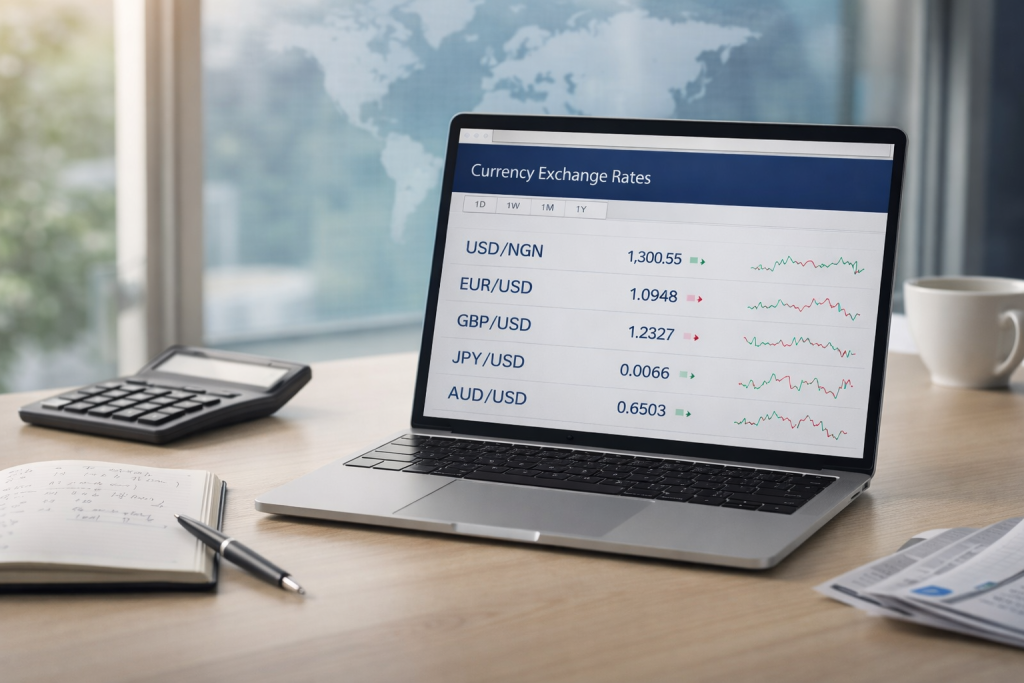
Exchange rates are usually written in pairs like this:
USD/NGN
EUR/USD
GBP/USD
The first currency in the pair is called the base currency. The second currency is called the quote currency.
So when you see USD/NGN = 1500, it means 1 USD (the base currency) equals 1,500 NGN (the quote currency).
Exchange rates are important because they allow countries to trade with each other. Without exchange rates, it would be very difficult for businesses and individuals to buy goods or services from other countries.
Now that you understand what an exchange rate is, the next question is: why does it keep changing?
Why Do Exchange Rates Change Every Day?
Exchange rates change because of supply and demand. Just like any other product, the value of a currency goes up when more people want it, and it goes down when fewer people want it.
Imagine many people around the world suddenly want to buy US dollars. This could happen because investors want to invest in the United States, or businesses need dollars to pay for goods. When demand for the dollar increases, its value rises. That means it will take more of another currency to buy one dollar.
On the other hand, if fewer people want a particular currency, its value may fall. This happens when investors lose confidence in a country’s economy or when there is political or economic uncertainty.
Exchange rates do not move randomly. They react to real events and economic conditions. Sometimes the changes are small. Other times they can be sharp and noticeable, especially during global crises or major economic announcements.
Because global markets operate almost 24 hours a day, exchange rates can move frequently. That is why the rate you see today may not be the same tomorrow.
Now let’s look at the main factors that cause these daily movements.
The Main Factors That Affect Exchange Rates
Exchange rates move because of real economic conditions. When something changes inside a country’s economy, the value of its currency can react. Below are the major factors that influence exchange rates.
1. Inflation
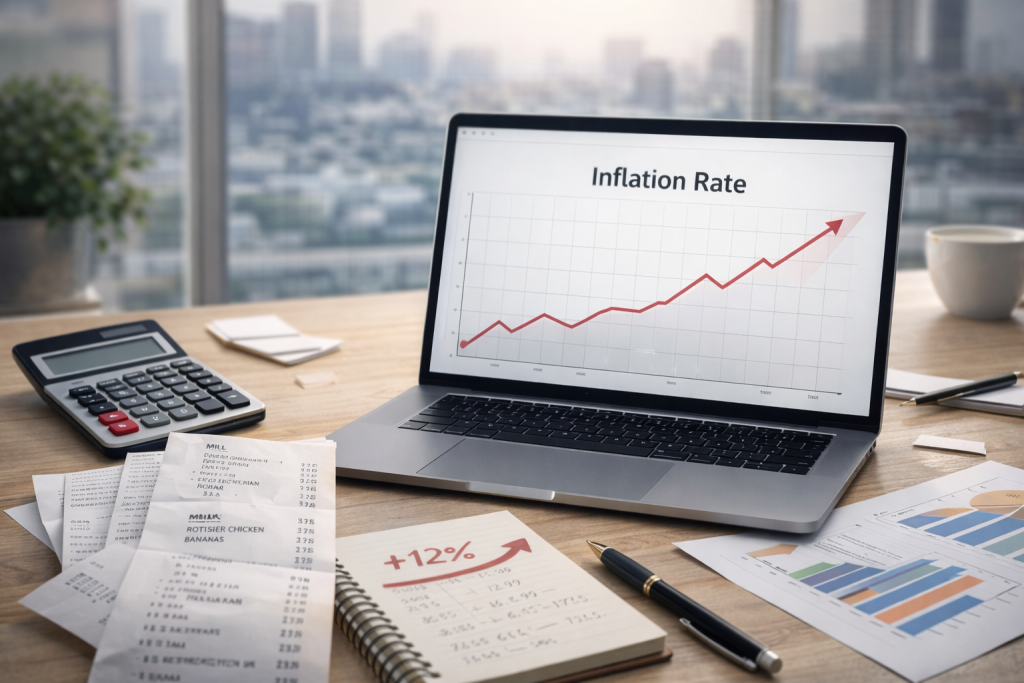
Inflation means the general level of prices in a country is rising. When inflation is high, money loses purchasing power. This often weakens the currency because it can buy fewer goods and services over time.
Countries with low and stable inflation usually have stronger and more stable currencies. Investors prefer currencies that hold their value.
2. Interest Rates
Interest rates are set by a country’s central bank. When interest rates rise, foreign investors may move their money into that country to earn higher returns. To invest, they must first buy that country’s currency.
When demand increases, the currency may strengthen.
If interest rates fall, investors may move their money elsewhere, and the currency can weaken.
3. Economic Growth
Strong economies usually support stronger currencies. If a country has growing businesses, low unemployment, and strong production, investors feel more confident.
When confidence increases, more people buy that country’s currency.
Weak economic growth can reduce demand for a currency.
4. Political Stability
Investors prefer stable environments. If a country experiences political instability, elections with uncertainty, or major conflicts, investors may withdraw their money.
When money leaves a country, demand for its currency falls, and the value can drop.
5. Global Events
Global events such as wars, pandemics, oil price changes, and trade disputes can affect exchange rates quickly.
For example, countries that export oil may see their currencies react strongly when oil prices rise or fall.
All these factors work together to determine how strong or weak a currency becomes.
Now that you understand what influences exchange rates, let’s look at the difference between official rates and market rates.
Official Exchange Rate vs Market Exchange Rate
In some countries, there is more than one exchange rate. This can confuse people who check the rate online and then see a different rate at the bank or from a money exchanger.
The official exchange rate is usually set or managed by the country’s central bank. This rate is often used for government transactions, large financial institutions, or certain approved businesses. It is sometimes more stable because it is controlled or influenced by policy decisions.
The market exchange rate, on the other hand, is based on real buying and selling between individuals, businesses, and financial institutions. This rate moves more freely depending on supply and demand.
In countries with strict currency controls, the official rate and the market rate can be very different. In more open economies, the two rates are usually very close.
This difference is important because the rate you see online may not always be the exact rate you receive when you exchange money. Banks and money transfer services may also add fees or margins to the rate they offer.
That is why it is helpful to use a reliable currency converter to check the current market estimate before making financial decisions.
Next, let’s look at how to convert currencies correctly so you can avoid common mistakes.
How to Convert Currency Correctly
Converting currency is actually simple once you understand the basic formula. You only need two things: the exchange rate and the amount you want to convert.
The basic formula is:
Amount × Exchange Rate
Let’s use a simple example.
If 1 US Dollar equals 1,500 Nigerian Naira, and you want to convert 50 dollars to naira:
50 × 1,500 = 75,000
That means 50 USD equals 75,000 NGN at that rate.
If you are converting the other way around, from naira to dollars, you divide instead of multiply.
For example, if you have 150,000 NGN and the rate is 1 USD = 1,500 NGN:
150,000 ÷ 1,500 = 100
So 150,000 naira equals 100 dollars.
Many people make mistakes by multiplying when they should divide, or dividing when they should multiply. A simple way to avoid confusion is to always check what “1 unit” of the base currency equals.
If you do not want to calculate manually, using an online currency converter makes it faster and reduces errors. It gives you an instant result based on the current rate.
Now let’s look at why exchange rates matter so much in everyday life.
Why Exchange Rates Matter in Everyday Life
Exchange rates are not just for banks and large businesses. They affect ordinary people every day, even if we do not always notice it.
If you travel to another country, you need to exchange your money. The rate you get determines how much you can spend abroad. A small difference in the rate can mean a big difference in your total budget.
If you shop online from international websites, prices may be listed in dollars, euros, or pounds. The exchange rate decides how much you actually pay in your local currency.
Freelancers and remote workers who earn in foreign currency are also affected. If you are paid in US dollars and withdraw into your local currency, a stronger dollar means you receive more money locally. If the dollar weakens, you receive less.
Businesses that import goods from other countries must pay in foreign currency. If the exchange rate rises, their costs increase. If it falls, their costs decrease. This can even affect the prices you see in local stores.
Students studying abroad also monitor exchange rates carefully. Tuition fees and living expenses can become more expensive or cheaper depending on currency movements.
Because exchange rates influence so many areas of life, understanding how they work helps you make better financial decisions.
Next, let’s look at what people mean when they say a currency is strong or weak.
What Does It Mean When a Currency Is Strong or Weak?
When people say a currency is strong, they mean it can buy more of another currency. When they say a currency is weak, they mean it buys less.
For example, if 1 US Dollar can buy a large amount of another currency, the dollar is considered strong compared to that currency. If it can buy only a small amount, it is considered weaker.
But a strong currency is not always good, and a weak currency is not always bad. It depends on the situation.
A strong currency can make imports cheaper. That means goods bought from other countries may cost less. This can benefit consumers because imported products become more affordable.
However, a strong currency can make exports more expensive for foreign buyers. If products from a country become too expensive, other countries may buy less from them.
On the other hand, a weaker currency can make exports cheaper and more attractive to other countries. This can help local businesses that sell goods internationally. But it can also make imported goods more expensive for local consumers.
So currency strength has both advantages and disadvantages. What matters most is stability and steady economic growth.
Now let’s look at how percentage changes apply to exchange rates and why that is important when rates move up or down.
How Percentage Changes Affect Exchange Rates
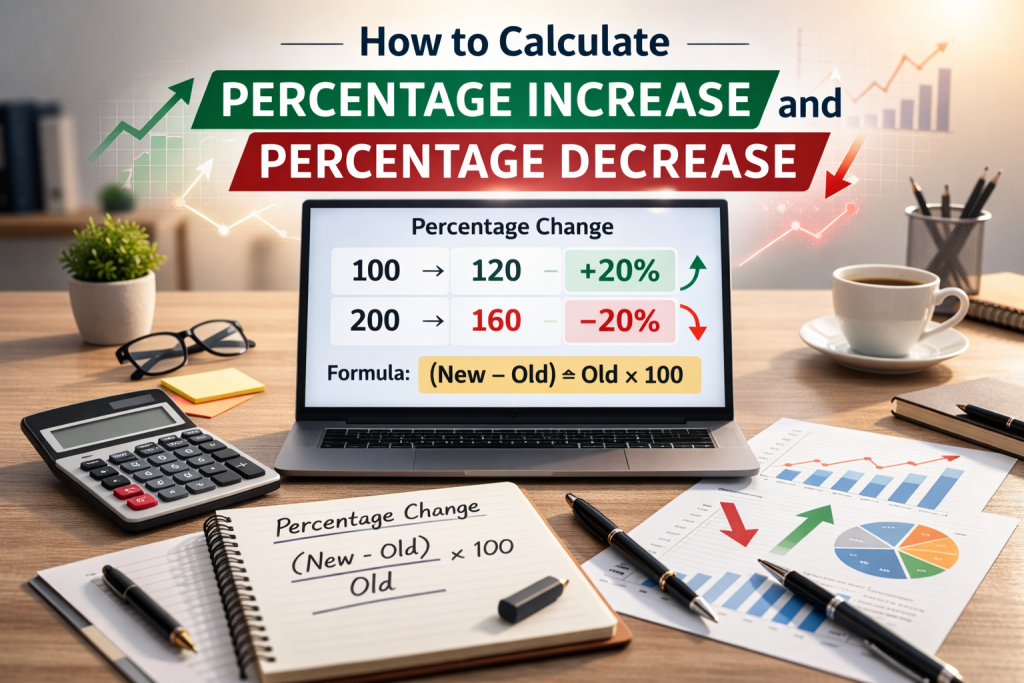
Exchange rates do not stay the same. They move up and down daily. Sometimes the movement is small, like 0.5%. Other times it can move by 2%, 5%, or even more.
These small percentage changes can have a big impact, especially on large amounts of money.
For example, imagine the exchange rate is:
1 USD = 1,500 NGN
If the rate increases by 5%, the new rate becomes:
1,500 + (5% of 1,500)
5% of 1,500 = 75
New rate = 1,575 NGN
Now imagine you are converting 10,000 USD.
At 1,500 → 15,000,000 NGN
At 1,575 → 15,750,000 NGN
That is a difference of 750,000 NGN just from a 5% change.
This is why businesses, investors, and even freelancers pay attention to percentage increases and decreases in exchange rates. A small percentage change can create a large difference when dealing with bigger amounts.
If the rate falls instead of rising, the opposite happens. You may receive less in your local currency.
Understanding percentage change helps you:
• Track currency trends
• Compare old and new rates
• Estimate profit or loss
• Decide the best time to convert
Using a percentage calculator together with a currency converter makes this much easier.
Next, let’s explain the difference between official rates and black market rates, because many people get confused about this.
Official Exchange Rate vs Black Market Rate
Many people notice that the exchange rate shown by banks or official sources is sometimes different from the rate used in the street or informal market. This difference can cause confusion.
The official exchange rate is the rate provided by central banks or authorized financial institutions. It is the rate used for government transactions, bank transfers, international payments, and official business operations.
The black market rate, on the other hand, is the rate people use in informal currency exchanges. It is usually driven by supply and demand in the local market. If there is high demand for foreign currency and limited supply, the black market rate can rise above the official rate.
For example, the official rate might show:
1 USD = 1,500 NGN
But in the black market, it might be:
1 USD = 1,600 NGN
This means you would receive more naira per dollar in the informal market.
The gap between these two rates often happens when there are restrictions on accessing foreign currency through official channels. When people cannot easily get foreign currency from banks, they turn to alternative sources.
It is important to understand that online currency converters usually display official or international market rates. They may not reflect local street rates in certain countries.
Always check the source of the rate and know which rate applies to your situation.
Next, let’s look at common mistakes people make when converting currency and how to avoid them.
Common Mistakes People Make When Converting Currency
Even though currency conversion looks simple, many people make small mistakes that can cost them money. The good news is that these mistakes are easy to avoid once you know what to look out for.
One common mistake is mixing up multiplication and division. When converting from the base currency shown in the rate, you usually multiply. When converting in the opposite direction, you divide. Getting this wrong can give you a completely incorrect result.
Another mistake is ignoring fees. Many banks, payment platforms, and transfer apps add service charges or hidden markups. So even if the exchange rate looks good, the final amount you receive may be lower than expected.
Some people also forget to check which rate they are using. There may be different rates for cash, card payments, online transfers, or international wire transfers. Using the wrong rate for your situation can lead to wrong estimates.
Rounding errors are another issue. If you round too early in your calculation, the final result may be slightly off. It is better to round only at the end.
Finally, many people do not check how recent the rate is. Exchange rates can change daily. Using an outdated rate can give you an incorrect estimate.
To avoid these mistakes:
Use a reliable currency converter.
Check for fees before sending money.
Confirm the latest rate before making large transactions.
Double-check whether you should multiply or divide.
Being careful with these small details can save you money and prevent unnecessary stress.
Next, we can add a section explaining how to use your calculator tools together on GlimTV Tools for smarter financial decisions.
How to Use GlimTV Tools Together for Smarter Decisions
One of the advantages of GlimTV Tools is that you do not have to rely on only one calculator. You can combine different tools to make better financial decisions.
For example, imagine you are paid 2,000 USD for a freelance project. You want to know two things:
- How much that equals in your local currency.
- How much you will lose if the exchange rate drops by 3%.
First, use the Currency Converter to change 2,000 USD into your local currency using the current rate.
Then, use the Percentage Calculator to calculate a 3% decrease on that converted amount. This helps you estimate potential loss if the rate falls before you withdraw your money.
You can also use the Percentage Calculator for:
• Calculating discount percentages when buying in foreign currency
• Estimating profit margins after currency conversion
• Tracking salary growth when paid internationally
• Measuring exchange rate increases over time
For business owners, combining these tools makes planning much easier. You can calculate costs in one currency, convert to another, and then apply percentage profit or tax calculations.
Instead of guessing, you are making decisions based on numbers.
This approach is especially useful if you:
Work remotely
Import or export goods
Pay for international subscriptions
Invest in foreign assets
Travel frequently
Using both tools together gives you clarity and confidence.
Next, we can finish the article with a strong conclusion and internal linking strategy to strengthen SEO for your site.
Final Thoughts
Exchange rates may seem complicated at first, but the basic idea is simple. One currency has a price compared to another, and that price moves based on supply and demand.
Inflation, interest rates, economic growth, political stability, and global events all play a role in how currencies rise or fall. Even small percentage changes can make a big difference when large amounts of money are involved.
Understanding how exchange rates work helps you:
Make better travel decisions
Plan international payments wisely
Track business profits accurately
Avoid common conversion mistakes
Protect your income from currency fluctuations
Instead of relying on guesswork, you can use reliable tools to make calculations quickly and accurately.
On GlimTV Tools, you can:
Convert currencies instantly using the Currency Converter
Measure rate movements using the Percentage Calculator
Both tools are designed to be simple, fast, and easy to use.
When you understand exchange rates and use the right tools, you take control of your financial decisions instead of being confused by changing numbers.